

TikTok Shop Made Sellers Pay for Returns-Buyers Cash In
- ZQdropshipping
- 6 days ago
- 4 min read

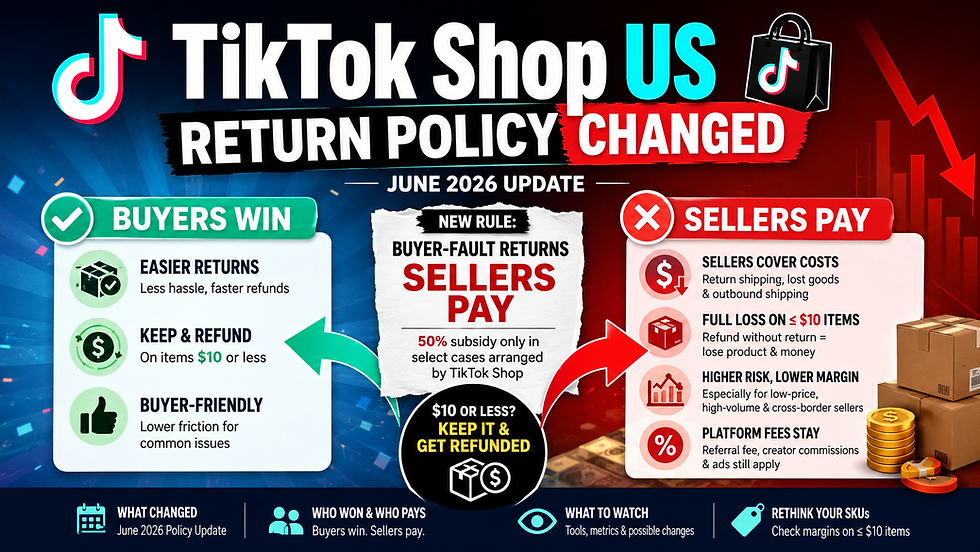
In June 2026, TikTok Shop US changed who pays for returns. One month on, the split is clear. Buyers got a cheaper, easier way out of unwanted orders. Sellers got the bill. For buyer-fault returns, sellers now carry the return-related costs, with a 50% subsidy left only for select cases TikTok arranges. On items priced $10 or less, buyers can keep the product and still get refunded. This article lays out what changed, who won, who pays, and what to watch.
1. What Happened
1.1 The core change
The rule targets buyer-fault returns, such as "no longer wanted" or "doesn't fit." For these, sellers now carry the return-related costs. A 50% subsidy survives only when TikTok Shop arranges the return for select reasons. TikTok lists examples like "no longer wanted" and "doesn't fit," but does not publish a full list.
For products priced $10 or less, TikTok Shop can refund the buyer without a return. The buyer keeps the item. The seller loses the goods and the outbound shipping already paid.
One detail cuts the other way. If the buyer arranges the return alone, the buyer pays the return shipping.
1.2 Who and what it covers
The change applies to US-region TikTok Shop orders. It hits domestic and cross-border sellers alike. High-volume sellers feel it most, since return costs rise with order count. One wrong address or one mis-ship now lands on the seller.
1.3 Two sides, two verdicts
Buyers came out ahead. On cheap items they keep the product and get their money back. Return friction fell for the most common complaints.
Sellers came out behind. They now fund returns they used to share with the platform. Industry coverage and seller discussion single out returnless refunds as the sharpest grievance. TikTok has not published return-cost data.
2. Background and Context
2.1 Why TikTok made the change
TikTok Shop wants lower return rates and faster after-sales handling. Its May 2026 Policy Pulse ties return reviews to two seller metrics: After-Sales Handling Time (AHT) and Invalid Seller Rejection Rate (ISRR). The return-cost shift fits this pattern. It makes returns the seller's problem to cut.
2.2 A recent precedent: sellers pushed back and won
Earlier in 2026, TikTok Shop tried a larger change. It planned to end seller-fulfilled shipping and move most merchants onto TikTok-controlled logistics, starting late February. Brands objected on cost and reliability grounds. Grande Cosmetics CMO Jerry Wu said carving out inventory for a TikTok warehouse risked fast stockouts. August founder Nadya Okamoto said trust was low and framed the choice around margin impact. On February 18, 2026, TikTok emailed sellers that "Seller Shipping remains unchanged." The mandate was pulled.
2.3 What is still open
The return-cost rule has not been reversed. That is the key difference from the February episode. TikTok Shop has said it will add cost visualization and an optional merchant protection insurance to help sellers manage return-cost swings. Both are described as planned or optional. TikTok has not shared adoption or payout figures.
3. Who Is Affected and How
3.1 Who wins
Buyers win first. A cheap unwanted order now ends with a refund and no trip to the carrier. Sellers with very low return rates gain a relative edge, because the rule punishes high returns. Fulfillment providers that cut error rates can win sellers trying to reduce return triggers.
3.2 The seller's case against it
Sellers carry the cost, and the structure makes it worse. On a sub-$10 order, one refund can erase the whole margin. The seller loses the cost of goods, eats the outbound shipping already paid, and gets nothing back to resell. Sellers report the worst losses come from buyers who use refund-without-return to keep items free.
The grievance is the direction, not the fee size. TikTok moved a cost it used to share onto the seller alone. It kept the 6% referral fee, and creator commissions and ad spend stay in place. One estimate put the total platform-plus-channel take near 30% of the selling price before this change. Returns now stack on top of that.
The pain is not spread evenly. Low-price, high-volume sellers face the most exposure. Cross-border sellers with long return legs pay more per return than domestic rivals. Thin-margin sellers may raise prices or drop their cheapest SKUs. Buyers feel the sharp edge only when they arrange a return themselves and cover the shipping.
Sellers have fought platform changes before. In February 2026 they forced TikTok to drop the seller-shipping plan. This time there has been no reversal.
4. What to Watch
The support tools rollout. Watch whether cost visualization and the optional merchant protection insurance launch fully, and what the insurance covers.
Your after-sales metrics. Track AHT and ISRR, which return reviews now feed into.
A possible revision. The February shipping mandate was pulled after backlash. Watch for any email notice softening the return-cost rule.
Your sub-$10 SKUs. Recheck margins on items at or below $10, where a refund can mean full loss.
Sources
1. TikTok Shop Seller Center - Requirements for Managing Returns, Refunds, and Replacements
2. TikTok Shop Seller Center - Policy Pulse, May 2026
3. Digiday - TikTok halts plan to end independent shipping for US sellers after backlash, Feb 2026
4. FastMoss - TikTok Shop Seller Costs in the US 2026
5. OneCart - TikTok Shop Seller Fees 2026
6. Tuke Marketing (tktk.com) - TikTok Shop US June return policy, 2026
7. heycross - TikTok Shop US: merchants to fully cover buyer return shipping from June, 2026





Comments